

Alphabet Inc. faces mounting antitrust pressures, and its stocks have been trading down by -11.4 percent amid regulatory uncertainty
Key Takeaways
- Alphabet reported Q3 Search & Other revenue of $63.4B vs consensus $65B, and YouTube Ads of $11.2B vs $11.4B, softening confidence in GOOG’s ad engine.
- Q3 EPS of $2.12 badly missed the $3.02 consensus, signaling pressure from costs, pricing, or both and raising questions for traders about earnings power.
- DOJ ad-tech remedies threaten to cut Google Ad Exchange’s win rate and shift spend to rivals like Magnite, weighing on GOOG’s long‑term ad-tech economics.
- A fresh securities class action alleges misleading statements about growth and stability, adding headline risk just as traders digest a weak quarter.
- Truist sees Microsoft’s AI peers running negative free cash flow, hinting GOOG may face cash and margin strain as AI infrastructure spending ramps.
Live Update At 08:32:23 EDT: On Thursday, October 29, 2026 Alphabet Inc. stock [NASDAQ: GOOG] is trending down by -11.4%! Discover the key drivers behind this movement as well as our expert analysis in the detailed breakdown below.
Quick Financial Overview
GOOG just came off a rough Q3 print at the exact moment the chart was already cooling. On the earnings side, Alphabet’s Q3 EPS landed at $2.12 versus $3.02 expected, a steep miss that tells traders margins are under real pressure. Revenue in core Search & Other hit $63.4B against a $65B consensus, and YouTube Ads reached $11.2B vs $11.4B expected. When both search and YouTube underperform, traders pay attention, because those are the engines that power the whole GOOG machine.
Yet, the balance sheet remains a fortress. Alphabet shows roughly $402.8B in annual revenue, profit margins north of 50%, and a P/E near 17. That’s a big‑tech cash cow trading at a mid‑teens multiple. Financial strength ratios scream flexibility: low debt, strong interest coverage, and current ratio around 2.7 give GOOG room to fund AI, buybacks, or more capex cycles.
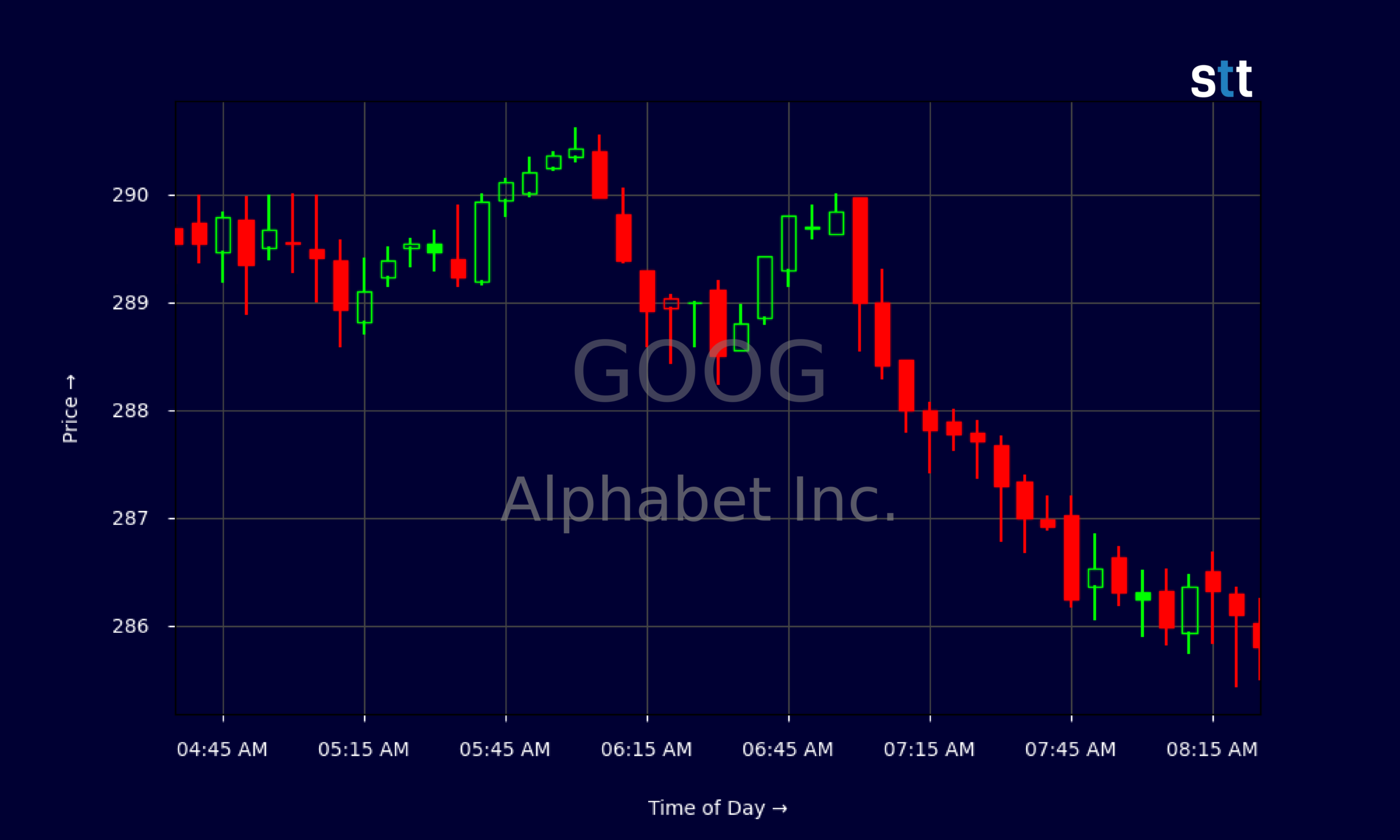
On the chart, though, GOOG has been fading from the mid‑$340s to the low $320s over recent days, with a series of lower highs since the $355 area. Intraday five‑minute data shows tight premarket action around $285–$290, signaling indecision. For short‑term trading, that combo — strong fundamentals but fresh earnings disappointment — often sets up volatile mean‑reversion and headline‑driven spikes both ways.
Why Traders Are Watching GOOG Now
Alphabet’s latest quarter reminded traders that even GOOG’s legendary ad machine can misstep. Search & Other revenue missing at $63.4B versus $65B and YouTube Ads coming in at $11.2B versus $11.4B show the core is slowing against expectations, not just growing more slowly. When the Street prices GOOG as a resilient compounder, these types of misses invite multiple compression and fast repricing.
The EPS gap is even harder to ignore. Delivering $2.12 versus $3.02 expected is not a small wobble; it is a full‑on miss that forces models to be torn up. For active traders, that type of surprise often drives gap‑downs, failed bounces, and clear intraday trend days. GOOG’s recent slide from the mid‑$340s toward $320 lines up neatly with that narrative of traders hitting the sell button first and asking questions later.
Layer on the DOJ ad‑tech case. Remedies that push auctions toward “truly neutral” mechanics could chop Google Ad Exchange’s win rate and push dollars toward players like Magnite. That’s structural, not just cyclical. Traders watching GOOG have to weigh whether the ad‑tech moat is narrowing at the exact moment earnings growth is under scrutiny.
The picture gets more complicated with the new securities class action targeting Alphabet. The claim: the company made “materially false and misleading statements” about operations, growth prospects, and financial stability between 2026/05/19 and 2026/07/16. Lawsuits like this are common for mega‑caps, but they still add headline risk. Every filing, motion, or leak can spark algo swings in GOOG during regular and after‑hours trading.
Finally, Truist’s call that Microsoft’s AI and cloud peers will run negative free cash flow under heavy AI capex quietly hangs over GOOG as well. The message to traders is clear — the AI arms race can crush free cash flow for everyone not named Microsoft. Even with Alphabet’s strong current margins and balance sheet, the market will question how much AI spend GOOG can push before cash flow sours.
Put it all together and you get a stock with elite fundamentals, a bruised narrative, and real regulatory and legal overhangs — prime territory for active trading, but dangerous for anyone not respecting risk.
Conclusion
For traders in the Timothy Sykes community, GOOG right now is a textbook “great company, messy tape” setup. Core businesses like Search and YouTube just missed expectations. EPS undershot by nearly a full dollar. That alone is enough to drive a repricing. Then the DOJ ad‑tech case threatens to chip away at Google Ad Exchange economics over time, and a securities class action questions past disclosures. These aren’t background details; they define the risk backdrop every time you hit the buy or sell button on GOOG.
At the same time, the fundamental base is far from broken. Alphabet still throws off massive revenue, sports thick margins, and sits on a powerful balance sheet. GOOG can absorb AI capex in ways smaller names cannot. But Truist’s view on Microsoft’s AI peers going negative on free cash flow reminds traders that even giants can see their cash engines strained in this capex cycle.
That tension — strong long‑term story versus short‑term disappointment and legal noise — is what creates opportunity for disciplined trading. As Tim Bohen, lead trainer with StocksToTrade says, “A good trade setup checks all the boxes—volume, trend, catalyst. Don’t trade if you’re missing pieces of the puzzle.” In Tim Sykes’s words, “Volatility is a gift if you’re prepared; it’s a disaster if you’re lazy.” For GOOG, that means tight risk management, clear levels, and zero hesitation to cut losses fast. This article is for educational and research purposes only and is not investment advice, but it is a clear reminder: in names like GOOG, narratives can shift quickly, and traders need to be even quicker.
This is stock news, not investment advice. StocksToTrade News delivers real-time stock market updates tailored to highlight the key catalysts driving short-term price movements. Our coverage is designed for active traders and investors who thrive in fast-moving markets, with a focus on volatile sectors like penny stocks, AI stocks, Robinhood stocks and other momentum plays. From earnings reports and FDA approvals to mergers, new contracts, and unusual trading volume, we break down the events that can spark significant price action.
Looking to level up your trading game? Explore StocksToTrade, the ultimate platform for traders. With powerful tools designed for swing and day trading, integrated news scanning, and even social media monitoring, StocksToTrade keeps you one step ahead.
Check out our quick startup guide for new traders!
- How to Read Stock Charts: A Guide for Beginners
- Trading Plan: 6 Steps to Create One
- How To Create a Stock Watchlist
Ready to build your watchlists? Check out these curated lists:
Once your watchlist is set, take the next step and trade with confidence using StocksToTrade’s robust platform. Don’t miss out — grab your 14-day trial for just $7 and experience the edge you need to thrive in today’s fast-paced markets.