

Oracle Corporation stocks have been trading down by -2.92 percent following bearish analyst commentary on future cloud growth prospects.
Key Takeaways
- Truist projects Microsoft’s big AI and cloud rivals will run negative free cash flow under heavy AI infrastructure spending, putting them on weaker footing than Microsoft in this AI cycle.
- Larry Ellison’s net worth fell $168.9B as Oracle’s heavy AI data center spending and rising debt have spooked traders and pressured ORCL.
- Oracle Health disclosed a major data breach impacting multiple U.S. hospitals and health systems, exposing sensitive financial and medical records.
- Law firm Ademi LLP is probing potential data privacy claims and damages tied to the Oracle Health breach, adding legal uncertainty around ORCL.
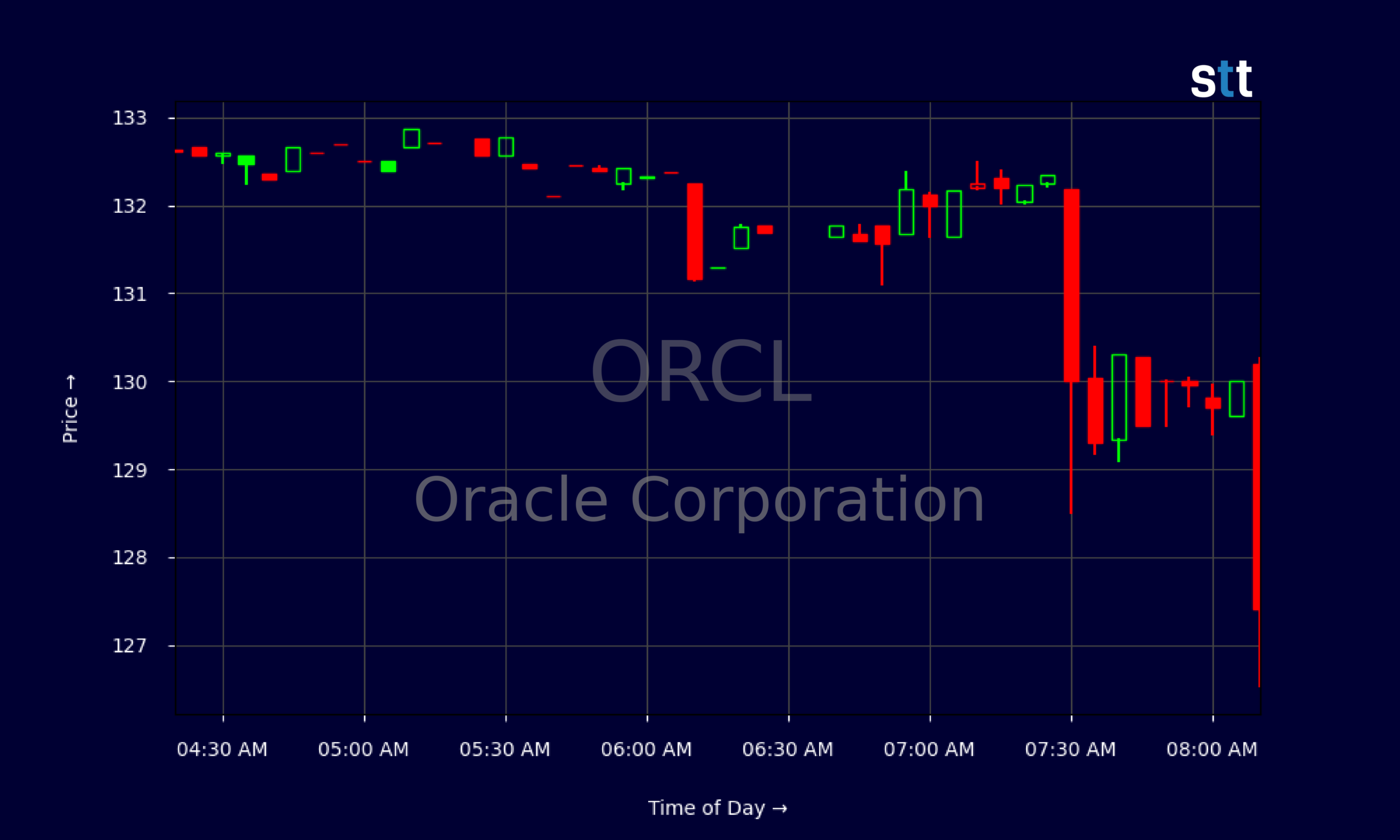
Live Update At 08:17:19 EST: On Monday, November 02, 2026 Oracle Corporation stock [NYSE: ORCL] is trending down by -2.92%! Discover the key drivers behind this movement as well as our expert analysis in the detailed breakdown below.
Quick Financial Overview
ORCL has been trading like a tug-of-war between AI hype and balance sheet risk. Recent daily candles show big swings: a rip from about $131 to an intraday high near $148, then a fade back under $140 and down to around $130. That kind of wide range tells traders there’s serious emotion in this name, not quiet accumulation.
Intraday, ORCL’s 5‑minute chart shows tight action around $132, then a slip toward $126–$130, signaling supply hitting every pop. For short-term traders, that’s a clear sign to respect overhead resistance and avoid chasing breakouts without volume confirmation.
Fundamentally, Oracle Corporation is a cash machine but also a leverage story. The company prints roughly $67.4B in annual revenue with fat 96% gross margins and strong operating margins around the high 30s on EBIT. Yet the balance sheet carries heavy weight: long‑term debt near $96.3B and total liabilities around $155.8B, versus equity of about $24.2B. Total debt to equity at 2.52 and a current ratio of 1.2 say there’s not much slack.
More Breaking News
- Oracle Stock Slides As AI Spending And Data Breach Rattle Traders
- GoDaddy Stock Jumps As Q3 Beat And AI Airo Fuel Bullish Outlook
- GPN Rises As Global Payments Scores Wave Of Upgrades
- MRVL Stock Pullback Has Traders Eyeing Key Support Levels
ORCL’s P/E near 22 and price-to-sales around 6 mean this isn’t cheap if growth or margins wobble. Traders watching ORCL need to track free cash flow and debt trends as closely as any AI headline.
Why Traders Are Watching ORCL Now
The recent headlines around ORCL explain why the stock’s tape looks nervous. Larry Ellison’s reported $168.9B drop in net worth is not just billionaire drama. It reflects how hard the market has leaned on Oracle Corporation as traders question the pace and size of its AI data center spending and rising debt load. When the founder’s paper wealth gets hit that hard, you know big money is exiting or hedging.
Truist added fuel by projecting that Microsoft’s major AI and cloud peers will run negative free cash flow under heavy AI infrastructure spending. ORCL sits squarely in that peer group. The message to traders is blunt: in this AI arms race, Oracle Corporation may have to burn cash and lean even more on its already leveraged balance sheet, while Microsoft looks stronger by comparison. That relative weakness narrative can cap ORCL rallies and turn every bounce into a potential short-selling zone.
On top of the capital allocation worries, Oracle Health dropped another bomb. The unit disclosed a significant data breach involving internal records for multiple U.S. hospitals and health systems, with exposure of personal, financial, and full medical data. For a company pitching mission‑critical cloud and health IT, that’s a serious trust hit.
The fact that Ademi LLP is already investigating potential privacy claims and damages tells traders this isn’t just an IT patch job. It’s a potential legal and reputational overhang that can drag on ORCL’s multiple. When you stack heavy AI capex, high debt, and a health‑care data breach together, you get a name that will stay on every active trader’s watchlist—for both sharp bounces and sharp flushes.
Conclusion
For active traders, ORCL is now a classic high‑stakes battleground. On one side, Oracle Corporation delivers thick margins, over $8.1B in quarterly operating cash flow, and a long record of monetizing databases, cloud, and enterprise software. On the other, the company is pouring roughly $8.5B into capital expenditures in a single quarter and running negative free cash flow as it builds AI data centers. That spending spree, layered onto nearly $96.3B in long‑term debt, is exactly what has rattled the market.
Then comes the Oracle Health breach. Sensitive medical, personal, and financial data tied to multiple U.S. hospitals and health systems is now part of the ORCL story. With Ademi LLP already circling, traders have to factor in potential legal costs, customer churn in health IT, and tighter oversight. None of that supports a rich tech multiple if growth stumbles.
So ORCL becomes a timing game. Dip buyers will focus on support zones near recent lows, while short‑biased traders will lean into pops toward prior highs, especially if negative free cash flow headlines gain traction. Position sizing and risk control matter more than opinions here. As Tim Bohen, lead trainer with StocksToTrade says, “If you’re still guessing at the end of your analysis, it’s probably not a trade worth taking.” In a name like ORCL, with so many moving parts and headline risks, that kind of trading discipline can make the difference between a controlled scratch and a painful drawdown.
Tim Sykes likes to remind traders, “Cut losses quickly, because big losses always start out small.” ORCL’s chart and news flow prove the point. Respect the volatility, know the story, and let price action—not hope—drive your trading decisions.
This is stock news, not investment advice. StocksToTrade News delivers real-time stock market updates tailored to highlight the key catalysts driving short-term price movements. Our coverage is designed for active traders and investors who thrive in fast-moving markets, with a focus on volatile sectors like penny stocks, AI stocks, Robinhood stocks and other momentum plays. From earnings reports and FDA approvals to mergers, new contracts, and unusual trading volume, we break down the events that can spark significant price action.
Looking to level up your trading game? Explore StocksToTrade, the ultimate platform for traders. With powerful tools designed for swing and day trading, integrated news scanning, and even social media monitoring, StocksToTrade keeps you one step ahead.
Check out our quick startup guide for new traders!
- How to Read Stock Charts: A Guide for Beginners
- Trading Plan: 6 Steps to Create One
- How To Create a Stock Watchlist
Ready to build your watchlists? Check out these curated lists:
Once your watchlist is set, take the next step and trade with confidence using StocksToTrade’s robust platform. Don’t miss out — grab your 14-day trial for just $7 and experience the edge you need to thrive in today’s fast-paced markets.