
Azitra Inc stocks have been trading down by -19.61 percent amid concerns over its latest clinical trial setback and outlook.
Key Takeaways
- Azitra is implementing a 1-for-10 reverse stock split effective 2026/10/26, consolidating its outstanding shares and continuing to trade on NYSE American under the AZTR ticker.
- Following the reverse split, the company’s outstanding share count will shrink from roughly 60.6M shares to about 6.06M shares, mechanically lifting the share price.
- Management is using the reverse split to support a higher AZTR per-share price and help maintain its NYSE American listing while it advances early-stage dermatology programs.
- Post-split, Azitra will receive a new CUSIP number, though AZTR will remain the listed ticker that traders watch on the tape.
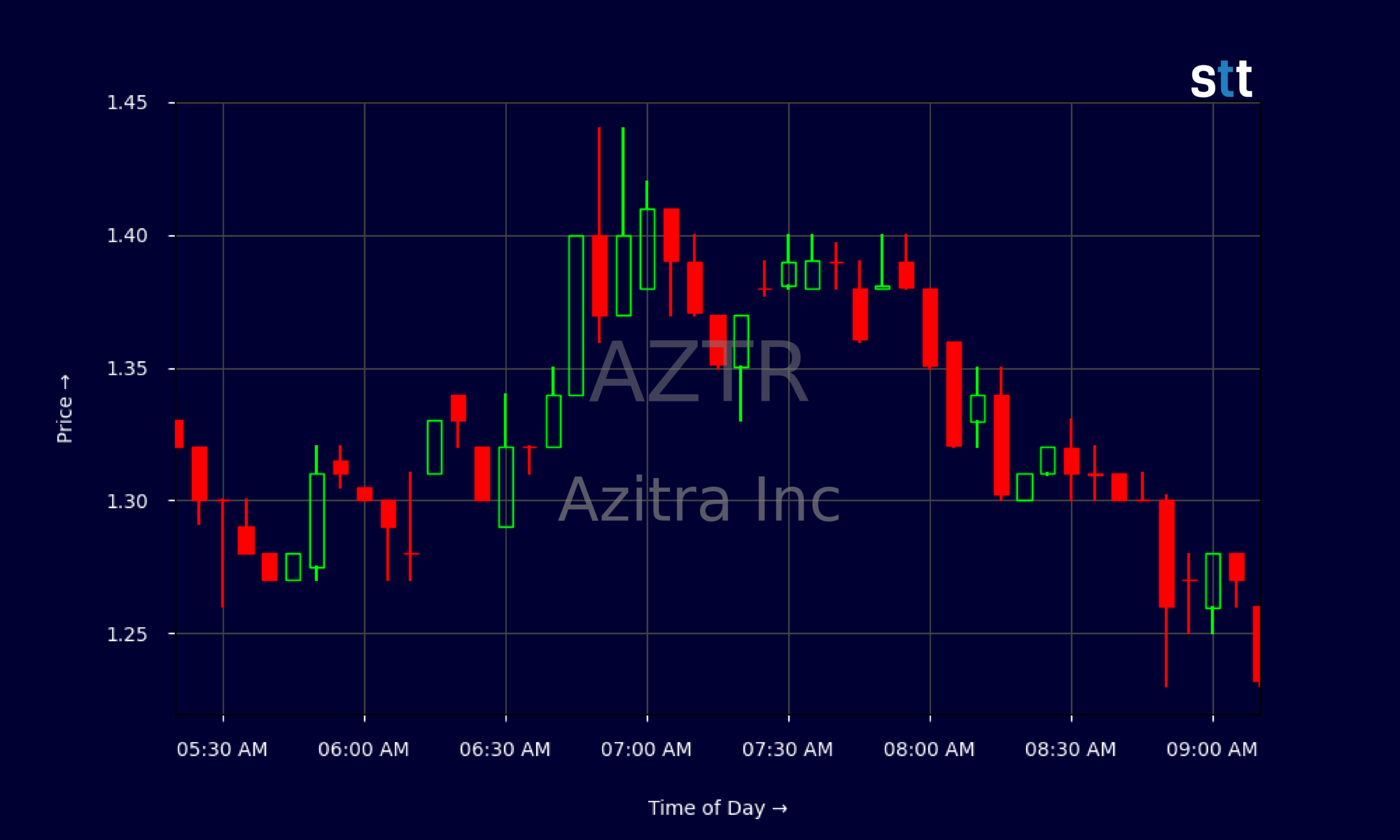
Live Update At 09:17:30 EDT: On Tuesday, October 27, 2026 Azitra Inc stock [NYSE American: AZTR] is trending down by -19.61%! Discover the key drivers behind this movement as well as our expert analysis in the detailed breakdown below.
Quick Financial Overview
AZTR has been trading like a classic micro-cap biotech under pressure, and the tape shows why this 1-for-10 reverse split is landing now. Before the latest spike, Azitra spent days grinding around $0.13 per share, with tight ranges and low absolute prices that threaten listing compliance. Then, on 2026/10/26, AZTR exploded from an open near $1.04 to a close around $1.53, a huge percentage move that reflects traders repositioning around the split.
Zooming in, the intraday 5‑minute chart shows AZTR holding above $1.25 for most of the session, with multiple pushes toward $1.35–$1.40 and a strong finish. That intraday action suggests active momentum trading, not just a sleepy corporate action.
Under the hood, Azitra is still an early-stage biotech burning cash. The latest quarterly numbers show about -$3.3M in operating cash flow and -$3.3M in net income. Yet AZTR carries roughly $6.7M in cash and minimal long-term debt, with a current ratio near 4.9. For traders, that mix — heavy losses but decent cash and low leverage — supports ongoing R&D but keeps AZTR firmly in speculative territory.
Why Traders Are Watching AZTR’s Reverse Split
AZTR is not just drifting here; Azitra’s 1-for-10 reverse split is a line in the sand. The company is shrinking its share count from around 60.6M to about 6.06M shares, a textbook move to boost the per-share price and protect its NYSE American listing. For active traders, that kind of structural change often resets the whole trading playbook.
Reverse splits carry baggage. Many AZTR veterans know they often follow long periods of price erosion. The sub‑$0.20 closes leading into this move confirm that Azitra’s stock had been under real pressure. At the same time, a reverse split does not change Azitra’s market value by itself — it simply slices the share pie into fewer, larger pieces. That matters for day traders who rely on float, liquidity, and clean chart levels.
Post‑split, AZTR’s float tightens, and intraday ranges can expand fast. The 5‑minute chart already shows AZTR swinging $0.10–$0.15 at a time around the $1.30 zone. Percentage-wise, that is serious volatility. With Azitra still focused on early-stage dermatology programs and no steady revenue engine, headlines and filings will continue to drive big moves.
Traders should also recognize why the company is fighting to stay on NYSE American. A delisting to the OTC market usually shrinks the trading audience, dries up liquidity, and kills some momentum strategies. By executing this 1‑for‑10 reverse split, Azitra gives AZTR more breathing room above minimum price thresholds, which can keep more brokers, algos, and day traders engaged.
In short, AZTR now trades as a leaner, higher‑priced stock with the same underlying risk profile — a setup that often attracts short-term momentum and gap‑and‑go style strategies.
Conclusion
For Azitra and AZTR, this reverse stock split is less about celebration and more about survival and positioning. The company is burning more than $3M per quarter, posting steep negative returns on equity and assets, and relying on its $6.7M cash pile to push early-stage dermatology programs forward. Those numbers tell traders that Azitra is still in the “prove‑it” phase.
At the same time, AZTR’s balance sheet shows low total debt and solid working capital, which buys management time. The reverse split, by lifting the per-share price and cutting the outstanding share count to about 6.06M, aims to keep AZTR on NYSE American and maintain access to broader capital markets and trading flows. For momentum traders, that’s critical. Listed status supports tighter spreads, more volume, and cleaner technical levels. It’s in these kinds of post‑split, momentum‑driven environments that trading discipline matters most; as Tim Bohen, lead trainer with StocksToTrade says, “I never chase price. The best opportunities allow me to enter on my terms, not when I’m feeling pressured.” That mindset can help traders avoid getting swept up in emotional moves around key levels.
The key now is how AZTR trades in the days and weeks after the split. Does the stock hold above the new psychological levels, or does it fade back as day traders move on? As Tim Sykes loves to hammer home, “The market doesn’t care about your opinion; it rewards preparation and discipline.” For anyone watching AZTR, that means studying the new post‑split chart, respecting the volatility, and remembering this is educational, research-focused content — not a signal to buy or sell.
This is stock news, not investment advice. StocksToTrade News delivers real-time stock market updates tailored to highlight the key catalysts driving short-term price movements. Our coverage is designed for active traders and investors who thrive in fast-moving markets, with a focus on volatile sectors like penny stocks, AI stocks, Robinhood stocks and other momentum plays. From earnings reports and FDA approvals to mergers, new contracts, and unusual trading volume, we break down the events that can spark significant price action.
Looking to level up your trading game? Explore StocksToTrade, the ultimate platform for traders. With powerful tools designed for swing and day trading, integrated news scanning, and even social media monitoring, StocksToTrade keeps you one step ahead.
Check out our quick startup guide for new traders!
- How to Read Stock Charts: A Guide for Beginners
- Trading Plan: 6 Steps to Create One
- How To Create a Stock Watchlist
Ready to build your watchlists? Check out these curated lists:
Once your watchlist is set, take the next step and trade with confidence using StocksToTrade’s robust platform. Don’t miss out — grab your 14-day trial for just $7 and experience the edge you need to thrive in today’s fast-paced markets.