

Alphabet Inc. stocks have been trading down by -10.82 percent amid mounting regulatory scrutiny of its core advertising business.
Key Takeaways
- Q3 EPS came in at $2.12 vs $3.02 consensus, a sharp miss that shocked many GOOG traders.
- Core Search & Other revenue reached $63.4B vs $65B expected, while YouTube Ads posted $11.2B vs $11.4B consensus.
- DOJ ad-tech remedies and neutral auctions threaten Google Ad Exchange’s win rate and long-time ad-tech margins.
- A new securities class action targets Alphabet over alleged misleading statements tied to growth and financial stability.
- Truist warns Microsoft’s AI peers may run negative free cash flow, raising questions about GOOG’s AI spending cycle.
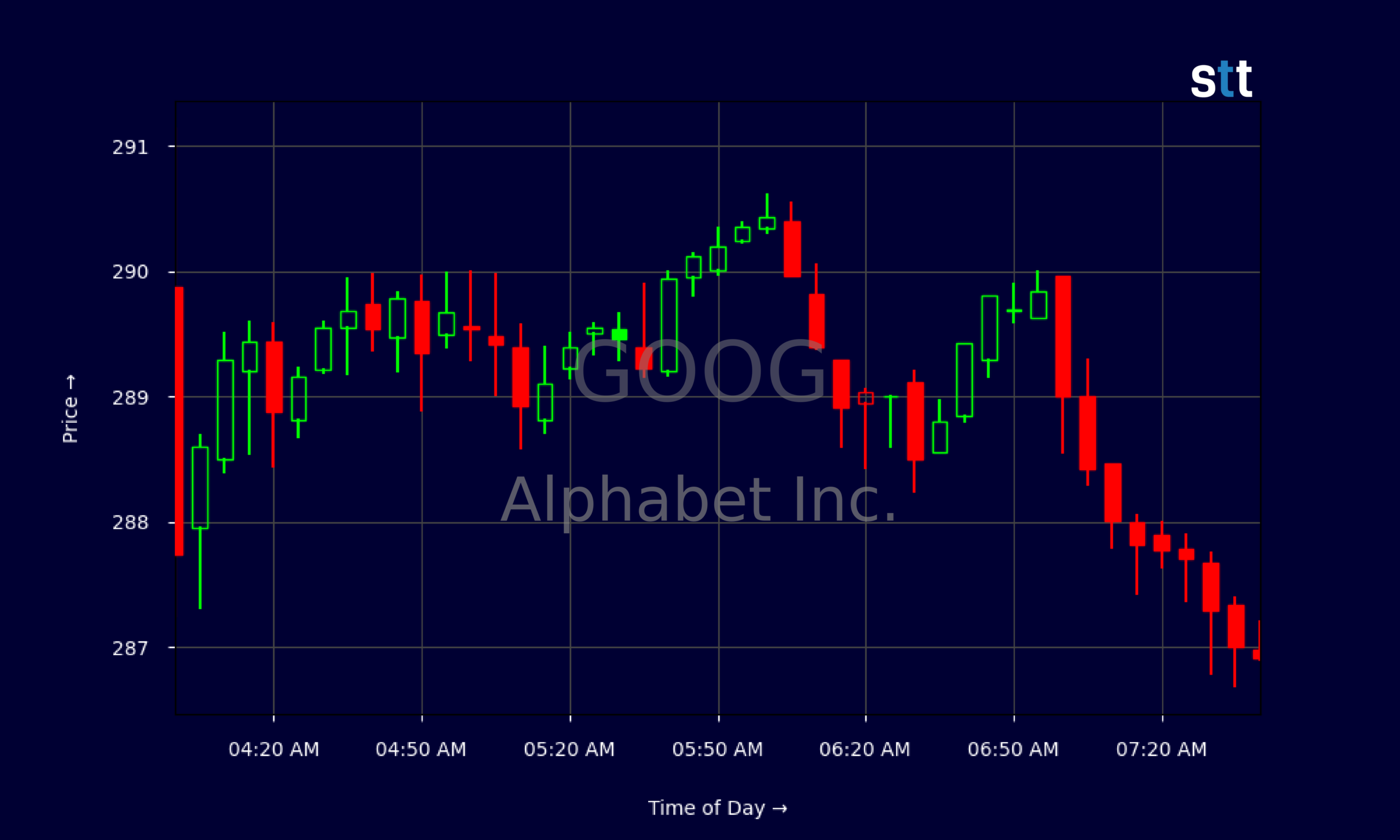
Live Update At 07:46:57 EDT: On Thursday, October 29, 2026 Alphabet Inc. stock [NASDAQ: GOOG] is trending down by -10.82%! Discover the key drivers behind this movement as well as our expert analysis in the detailed breakdown below.
Quick Financial Overview
GOOG has been trading like a former momentum leader that just hit a wall. The daily chart shows Alphabet slipping from the mid-$340s to the low $320s over the last couple of weeks, with the latest close near $321.89. That’s a steady grind lower, not a crash, which tells traders this is controlled selling and repricing after new information.
Intraday, GOOG has been trapped in a tight band around $287–$290, with small five-minute candles and no real follow‑through. That kind of chop usually means short-term traders are waiting for the next catalyst before committing size. The big issue is that fresh catalyst — Q3 earnings — landed poorly.
More Breaking News
- HLN Stock Grinds Higher As Haleon Attracts Steady Trader Interest
- Community Health Systems Falls 16% After Earnings Miss
- Dine Brands Global Jumps 8% After Takeover Bid Report
- Bicara Therapeutics Falls 45% Today
Alphabet just printed Q3 EPS of $2.12, way under the FactSet consensus of $3.02. For a mega-cap like Alphabet to miss by almost a full dollar is a serious expectations reset. At the same time, the underlying business still looks powerful on paper: revenue around $402.8B, gross margin near 81.5%, and profit margins north of 50%. GOOG’s balance sheet is strong, with low debt and a current ratio of 2.7, but traders are now questioning how much they should pay for that strength when growth and execution stumble.
Why Traders Are Watching GOOG Now
Alphabet and GOOG traders are staring at a rare combo: an earnings miss, core revenue shortfalls, rising regulatory heat, and fresh litigation headlines all at once. That’s how sentiment flips from “can’t lose” to “show me” in a hurry.
Start with the earnings shock. Q3 EPS at $2.12 versus $3.02 expected is not a rounding error; it’s a major surprise on profitability. When a name like GOOG blows through the bottom of the range like that, Wall Street models get taken down, which often pressures the multiple. That’s why you’re seeing GOOG drift lower instead of bouncing hard — traders are repricing future earnings, not just reacting to a one‑day headline.
The top line isn’t bailing Alphabet out either. Search & Other revenue landed at $63.4B versus $65B consensus, and YouTube Ads came in at $11.2B versus the $11.4B Street wanted. These are Alphabet’s flagship ad engines. When both underperform at the same time, traders start asking whether digital ad growth is slowing or share is leaking to rivals.
Layer on the DOJ ad-tech case. If remedies force truly neutral auctions, Google Ad Exchange could lose win rate and see spend redirected to players like Magnite. That hits the high‑margin ad-tech stack that helped power GOOG’s cash machine. At the same time, Truist is telling the market that Microsoft’s AI and cloud peers may run negative free cash flow as they pour money into AI infrastructure. Traders naturally wonder where Alphabet sits in that pecking order. If Microsoft is perceived as the stronger free cash flow story, GOOG may trade at a discount while it spends heavily to keep up in AI.
Finally, the securities class action alleging Alphabet misled the market on operations, growth, and stability adds governance risk. Even if the direct financial hit ends up modest, headline risk and credibility questions can weigh on sentiment and support levels for GOOG in the near term.
Conclusion
For active traders, GOOG is shifting from a straightforward large-cap trend to a complex, headline-driven battleground. You have a powerful, profitable business — 81.5% gross margins, strong returns on equity, low leverage — but the market doesn’t trade those numbers in a vacuum. It trades surprises, and Alphabet just delivered several negative ones at once.
The EPS miss to $2.12 versus $3.02 consensus tells traders that costs, capital allocation, or both need tighter discipline. The misses in Search & Other and YouTube Ads say the ad engine is not firing on all cylinders. Add the DOJ’s ad-tech push and the risk of lower AdX win rates, and GOOG’s premium multiple is suddenly up for debate. It doesn’t help that Truist is effectively framing Microsoft as the relative free-cash‑flow winner in this AI arms race, which makes traders more cautious about Alphabet’s long-term spend.
The class action suit is one more log on the fire. Litigation rarely breaks a company like Alphabet on fundamentals, but it can extend downtrends and cap rallies when every bounce is met with new negative headlines.
This is exactly the type of tape where discipline matters. As Tim Sykes likes to say, “The best traders aren’t predicting the future, they’re reacting to the present and cutting losses fast when the thesis cracks.” And as Tim Bohen, lead trainer with StocksToTrade says, “Time and experience have taught me that missed opportunities are part of the game. There’s always another setup around the corner.” For GOOG, the thesis just got more complicated. Traders who stay objective, respect key support and resistance levels, and keep position sizes in check will be in the best spot to trade the volatility — not get buried by it.
This is stock news, not investment advice. StocksToTrade News delivers real-time stock market updates tailored to highlight the key catalysts driving short-term price movements. Our coverage is designed for active traders and investors who thrive in fast-moving markets, with a focus on volatile sectors like penny stocks, AI stocks, Robinhood stocks and other momentum plays. From earnings reports and FDA approvals to mergers, new contracts, and unusual trading volume, we break down the events that can spark significant price action.
Looking to level up your trading game? Explore StocksToTrade, the ultimate platform for traders. With powerful tools designed for swing and day trading, integrated news scanning, and even social media monitoring, StocksToTrade keeps you one step ahead.
Check out our quick startup guide for new traders!
- How to Read Stock Charts: A Guide for Beginners
- Trading Plan: 6 Steps to Create One
- How To Create a Stock Watchlist
Ready to build your watchlists? Check out these curated lists:
Once your watchlist is set, take the next step and trade with confidence using StocksToTrade’s robust platform. Don’t miss out — grab your 14-day trial for just $7 and experience the edge you need to thrive in today’s fast-paced markets.