
In case you missed it, the Nasdaq officially ended last week in bear territory:
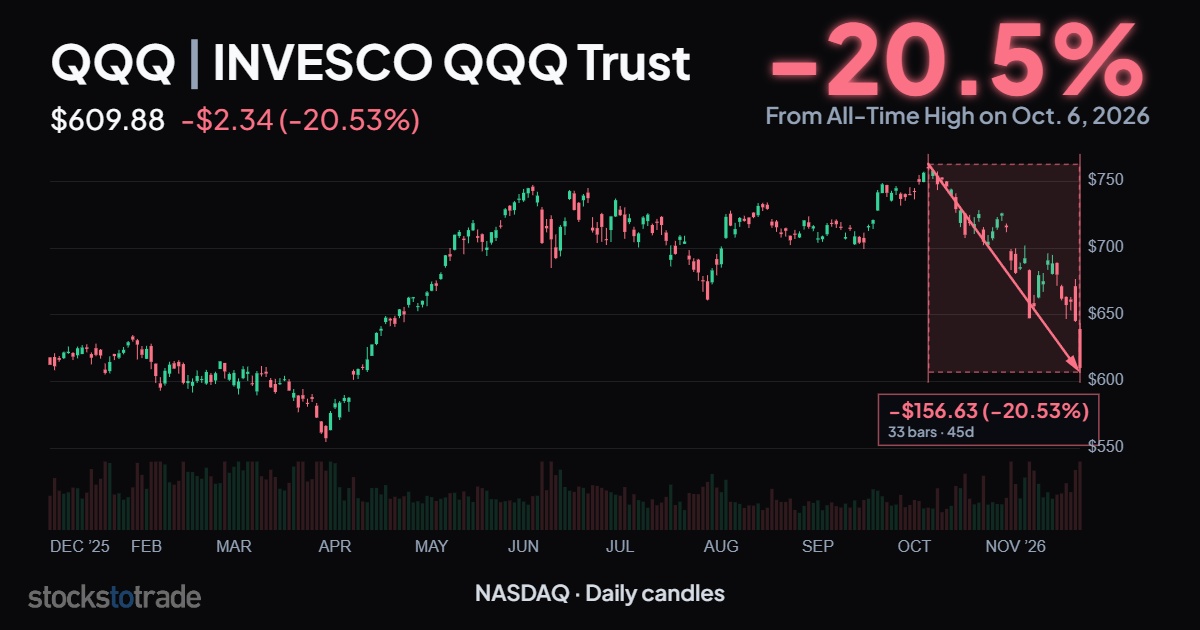
Invesco QQQ Trust (NASDAQ: QQQ), year-to-date, daily candles, bear market
So, since a lot of traders are suddenly talking about short selling, let’s look at a way to “go short” without taking on the same risk that short sellers take. Once you see it, it’s something to celebrate…

The Big Picture
Back during the financial crisis (2007–2009), I was short-biased.
Now, I don’t short sell any longer. Sometime around 2016 it just became too risky. The short squeezes got so bad that every trade was a white-knuckle experience.
So, like my mentor Tim Sykes, I changed to long-biased trading.
The good news is, when things get volatile like this…
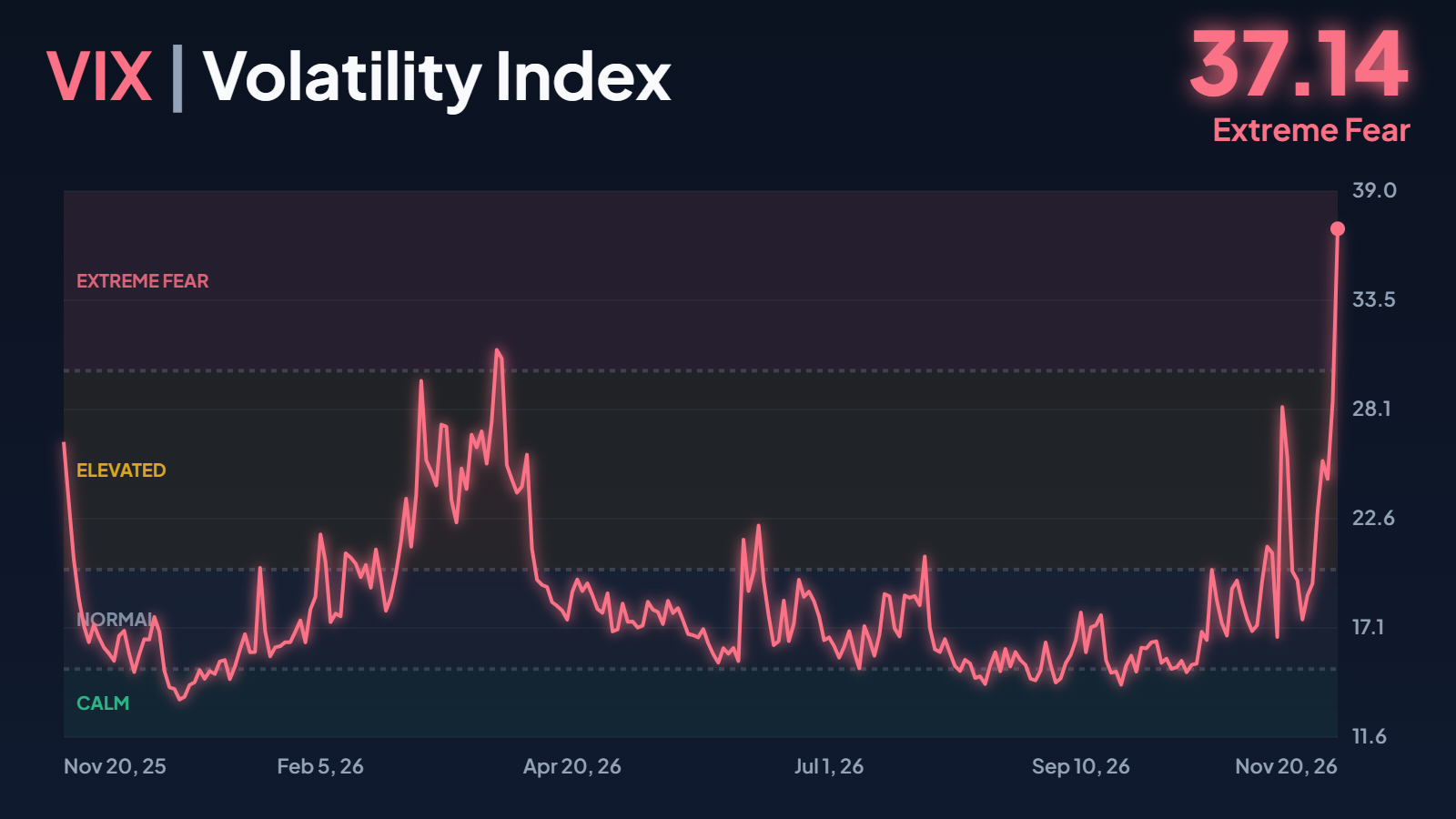
Cboe Volatility Index (VIX), 1-year, extreme fear
There are a LOT better options than we had back in 2008.
Welcome to ETF Mania
Back then, ETFs existed, but they were typically just the ones based around sectors or indexes. You didn’t have the individual stock ETFs.
Fast forward to today: there are about 600 single-stock ETFs. Many of them are leveraged. So, they move 2x or 3x the percentage that the underlying stock moves.
Now, here’s where it gets interesting for a market like this…
There Are Roughly 60 Single Stock Inverse ETFs
An inverse ETF moves in the opposite direction of the underlying stock.
If these inverse ETFs had existed back when I was short-biased, I wouldn’t have done any short selling. I would’ve just been trading the inverse ETFs every day.
When you go long the inverse ETF, your thesis is the same as a short seller. So, you get to go short by going long.
Here’s the key difference:
When you go long an inverse ETF, the worst you can do is a 100% loss. Now, that doesn’t sound like fun, but if you follow what I teach you, you’ll never do that.
But remember the difference…
If you short a stock, and the stock squeezes, you can lose more than 100%. That’s why so many short sellers blow up these days.
Now, what’s great about trading the leveraged ETFs is…
All Our Patterns Apply
You can basically short by going long, using the patterns we teach.
So, if a leveraged inverse ETF like the GraniteShares 2x Short NVDA Daily ETF (NASDAQ: NVD) hits the Oracle signal like it did on Friday (Nov. 20)…
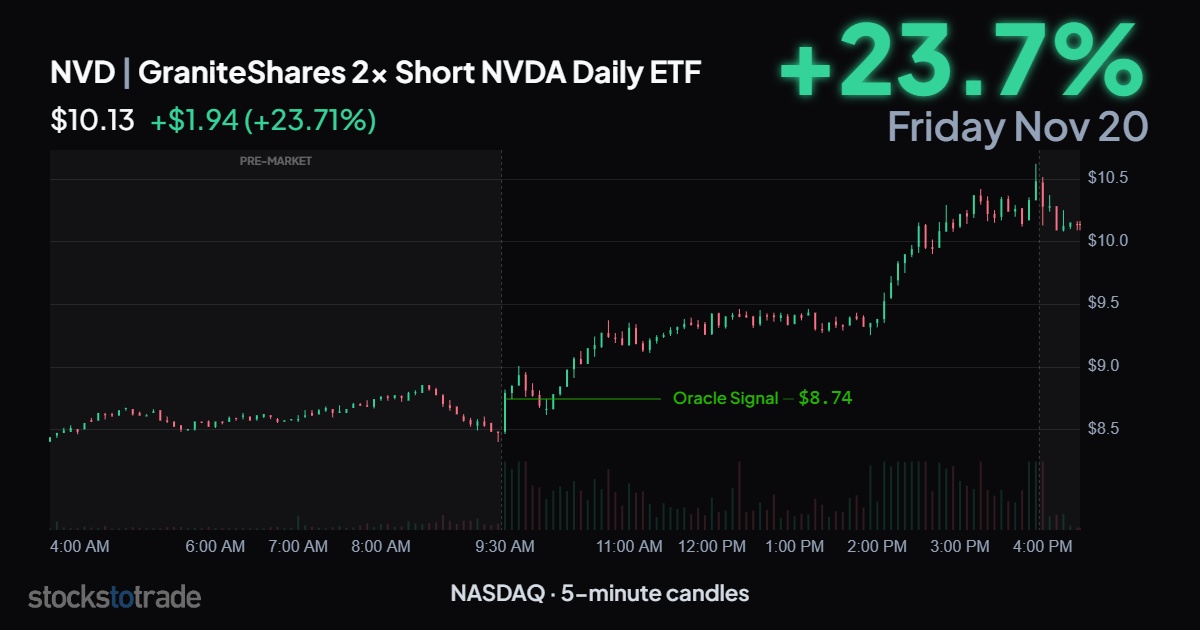
NVD 11/20/26, 5-min candles, beautiful Oracle signal hit and winning trade
You can trade it like a long-biased trader, and take advantage of the market volatility without the same level of risk as a short seller.
My Take
With small caps, liquidity is often a big problem for short sellers. By the time the stock becomes a good short, all the liquidity is gone.
If you short a small cap on day one, you’re risking unlimited disaster, okay? When they become a good short three or four days later, the liquidity is gone.
With inverse single-stock ETFs (those that show up on Oracle), you won’t have to worry about that.
That’s the beautiful thing about the inverse ETFs: they’re liquid. You can get in and out when you want, and you don’t run the risk of being trapped in something, panicking to cover.
Watchlist
I usually bring plays that are actionable at the time I’m writing the newsletter.
Today, I’m bringing a beaten-down stock that is at a key support level. Whether or not you trade depends on whether it holds.
I’m still bullish on AI in the long run, and Alphabet (NASDAQ: GOOGL) has been one of my tops in the sector since November 2025.
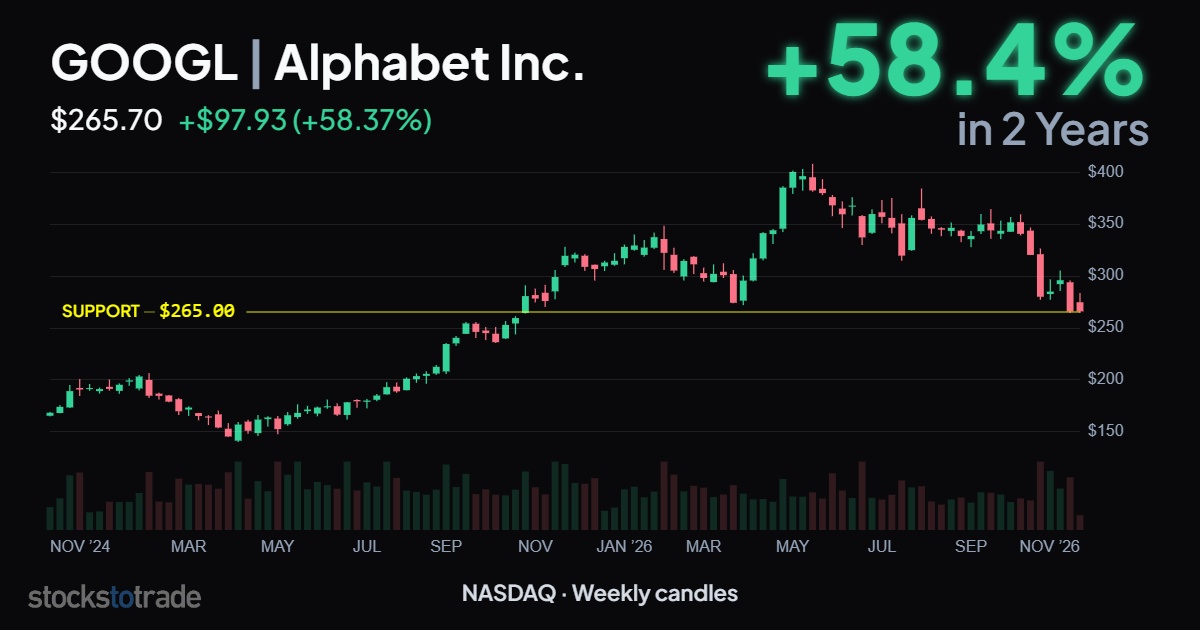
GOOGL 2-year, weekly candles, support
Consider this anticipatory. If the sell-off keeps going, stay away until things firm up. You don’t want to catch a falling knife, okay?
Once the market firms up, then we look to position for the next leg higher.
On My Radar
- Follow the money: Wall Street bought value stocks last week
- Anthropic (NASDAQ: ANT) is doing exactly what I described here (scenario #3)
- Ben Sturgill’s FREE 2-day options bootcamp starts today (I love working with Ben and recommend this 100%)